New Collection Coming Soon
New Collection Coming Soon
New Collection Coming Soon
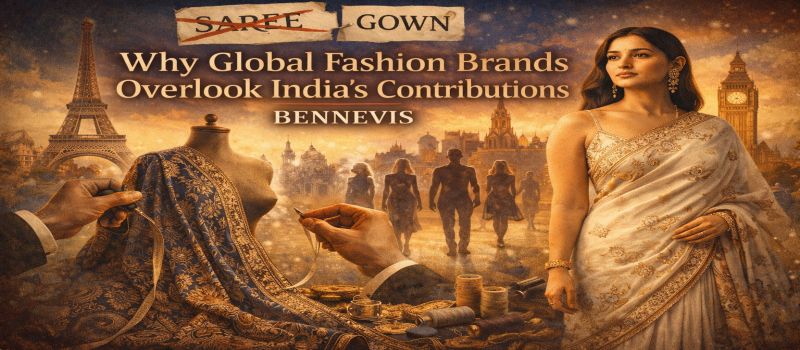
Why Global Fashion Brands Overlook India's Contributions
For centuries, India has been a silent powerhouse in the global fashion landscape. Its rich heritage of textiles, intricate embroidery, handwoven fabrics, and artisanal craftsmanship has shaped global trends in more ways than many realize. Yet, when international fashion choices highlight global influences, India often receives only a passing mention, if any at all. This persistent oversight raises an important question: why do global fashion trends continue to overlook India’s contributions?
This perspective resonates deeply with Bennevis, a brand rooted in Indian menswear and its evolving global identity.
Historically, India’s textile industry has played a crucial role in the world’s fashion narrative. From the opulent Mughal era with its fine muslins and silks, to the globally admired block prints of Rajasthan and the timeless Banarasi weaves, India has offered a treasure trove of inspiration. In fact, many European luxury houses have quietly drawn from Indian motifs, techniques, and aesthetics, often without giving due credit.
It is this legacy of craftsmanship and textile excellence that continues to inspire contemporary Indian menswear labels such as Bennevis, where heritage becomes the foundation for modern expression.
One major reason for this neglect is the dominance of Western-centric fashion narratives. Paris, Milan, New York, and London are seen as the epicenters of high fashion, while regions like India are often labeled as “ethnic” or “exotic,” placing them outside the mainstream fashion conversation. This categorization fails to recognize that Indian fashion is not just about tradition, but about continuous innovation blending centuries-old craftsmanship with modern design.
A recent example that sparked this very conversation is Alia Bhatt’s appearance at Cannes 2025. She wore a stunning ensemble made by Gucci, which Alia herself described as a saree. Surprisingly, Gucci did not refer to it as a saree at all, instead calling it a gown. This subtle shift in terminology erases the cultural identity of the garment. A saree, long a symbol of Indian elegance and heritage was reframed to fit a Western narrative. When a saree becomes a gown in the eyes of a luxury house, it isn’t just a styling decision; it is a dismissal of cultural identity.
Additionally, many global fashion houses tend to approach India as a lucrative market rather than a source of creativity. Their presence in Indian markets is largely commercial, focusing on selling luxury goods to a growing affluent class, without fully acknowledging the depth of design innovation that exists within the country itself.
Fortunately, the narrative is beginning to shift. Designers like Sabyasachi Mukherjee, Rahul Mishra, and Gaurav Gupta are not just representing India on international platforms—they are asserting that Indian fashion is as forward-thinking and globally relevant as any Parisian atelier. Their designs blend indigenous techniques with contemporary silhouettes, demanding recognition on their own terms.
In conclusion, while global fashion brands have long overlooked or rebranded India’s contributions, the tide is turning. Indian fashion is gaining visibility on global stages, with designers and cultural voices subtly challenging outdated narratives. As these conversations grow stronger, labels from within India’s fashion ecosystem, including Bennevis, continue to advocate for recognition that goes beyond aesthetic borrowing. The world is slowly awakening to what India has always known: its fashion is timeless, innovative, and worthy of credit—both in form and origin.

Ready-to-Wear &
Bespoke Tailoring

World Wide Shipping

Secure Shopping

Best Courier Services


